
A well-written will can resolve many issues related to succession planning. Without a Will, there are higher probabilities of disputes in distribution. The need for a Will is even more important for families with special needs children. Besides distribution, the Will needs to address various issues to remove ambiguity and ensure a secure future for the child.
Spell It Out
For one, among the siblings, one will need a lifetime support and the parents would wish to allocate a higher share to him/her simply because the child cannot manage their own affairs. There are chances of disputes if clear reasons are not spelled out in the Will or if siblings do not agree. So it is important to build consensus and spell out the reasoning for any differential allocation.
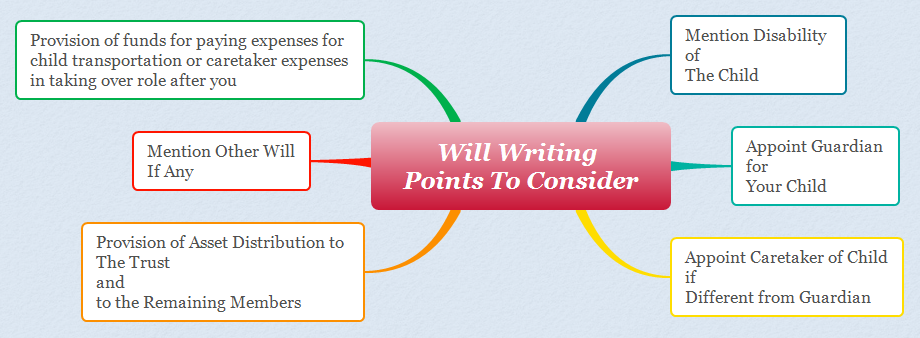
Also, since the Will contains a provision for the special needs child, it is necessary that this document mention the exact nature of disability. It can contain a statement such as “My Daughter had limited academic progress and having Mental Retardation is in need of special attention and support”. This will help others to know the nature of the disability.
Need for a Guardian
A guardian is an important person for a family with special needs children. He or she is the one who will manage the child’s affairs when parents are not there. Even in the eyes of law once the disabled child attains age 18, then any person, including parents, deciding on his/her behalf had to obtain the Guardianship legally. Hence, a guardian will be needed for managing the child’s affairs if the parents are no more. Who will be the guardian and in what capacity he/she will manage the affairs of the child needs to be spell out clearly in the Will. Ideally, the Will should contain a provision for an alternate guardian if the first choice is not available.
Sometimes it is not wise to appoint a single person as a guardian for both personal and financial affairs. You may wish to appoint a caretaker for the child who will manage personal affairs, while the guardian will manage the financial affairs. The Will should carry in detail the appointment and identity of the person as caretaker of the child.
There will be expenses when your child’s guardian or caretaker assumes the role. It may be travel expenses for the guardian or transportation expenses of the child to the individual. How these expenses will be paid and from where should be illustrated in the Will clearly. A good option is to allocate any assets, such as life insuranc,e to meet this objective.
Funding for Trust
For special needs children’s families a trust is the most viable option for child’s future. A private trust is a separate legal entity and so there are no individual owners. The child is designated as the beneficiary, wherein he/she derives the benefit of all the income generated by the trust. To manage the assets, the trust appoints 2-3 trustees. Families, relatives, or friends can gift the assets, movable or immovable, to the trust, which is then utilized for child benefit. With a trust structure, the parents ensure that after them, the assets they have accumulated for their child do not go directly to him/her neither owned by any individual, but to an entity that works only for the child’s benefit.
The life insurance, investments such as MF, FDs, PPF, etc., along with other assets (Properties) accumulated for the benefit of the chil,d need to go to the trust when the parents are no more. The Will should carry the provision of bequeathing these assets to the trust. This will ensure that on the death of the parents, the legacy is utilized for funding the trust created for child’s future.
Mention Other Will
Many establishments, such as defens,e have their own setup of Will drafting for their employees. However, even then, especially in cthe ase of special needs children’s families, a detailed Will is required for ensuring the effective distribution of the legacy towards the trust created for the Child. In such instance, the Will created at the employer level should be mentioned in the current Will.
There may be other considerations, based on your specific situation, which may emerge as you start writing your own Will. It is important to think more deeply about what you want and how, and include the provisions in the Will so that the executor has clarity on your intentions. Having a Will is any day better than not having any, so rather than just thinking about it, start writing one.